
COLOUR TATTOO REMOVAL
Having tattoos on your body is no longer a luxury. It is beautiful, fashionable, and modern. Qualitatively applied drawings do not lose colour pigment and shape on the human body even after many years. Colour tattoos are trendy.
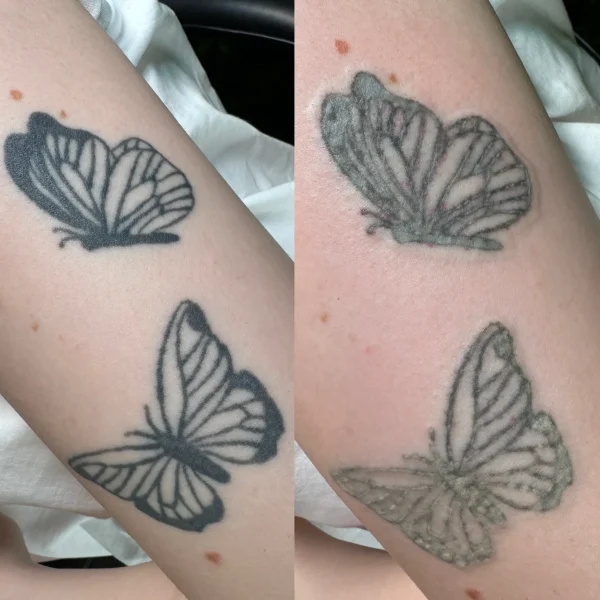
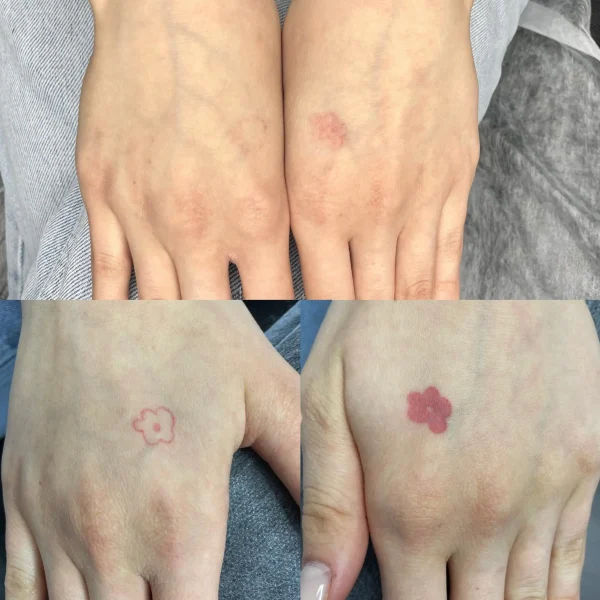
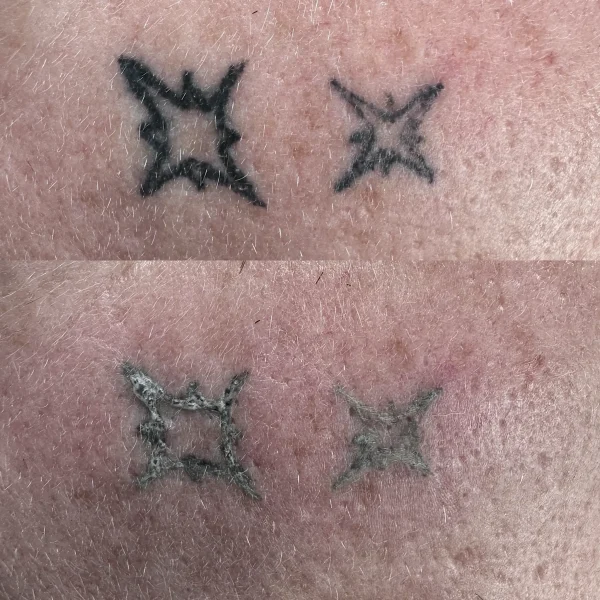
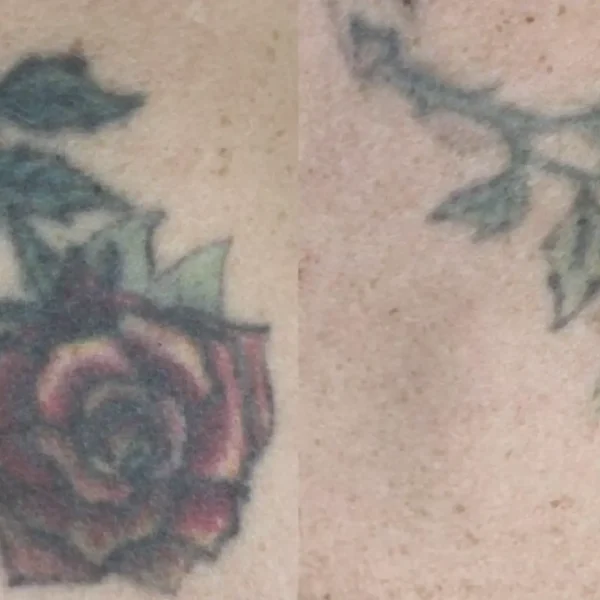
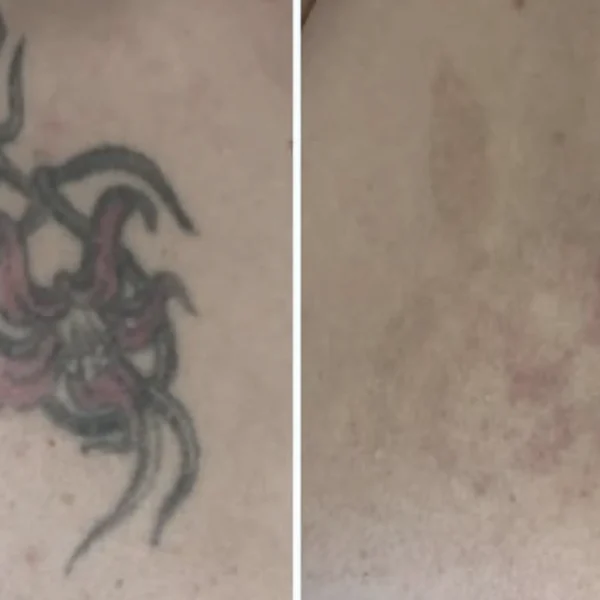
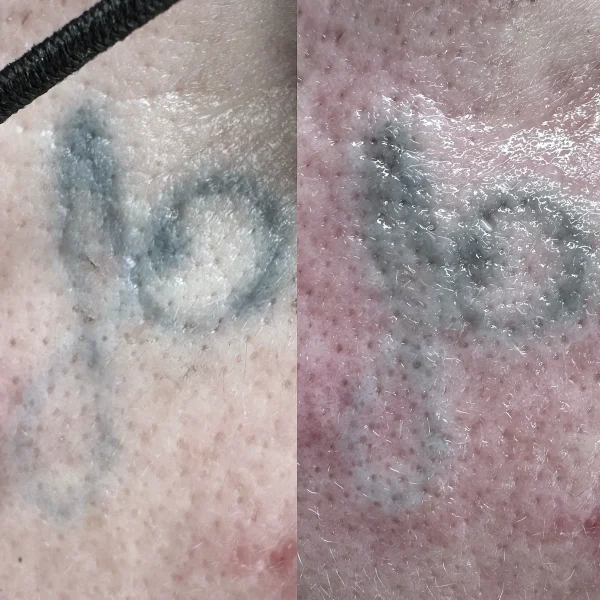
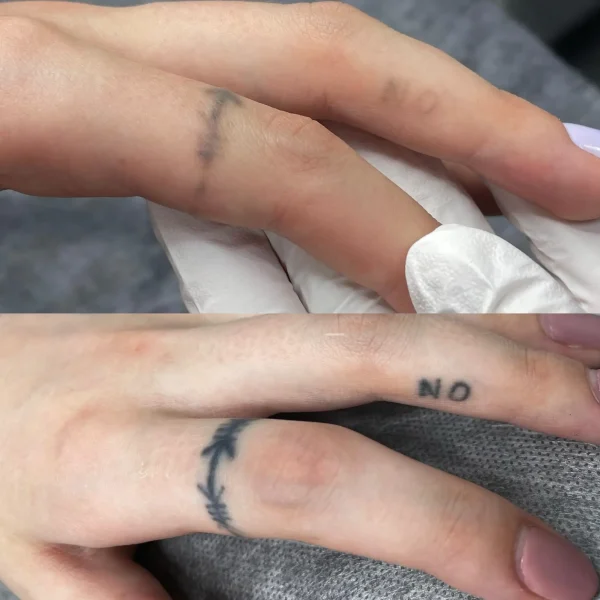
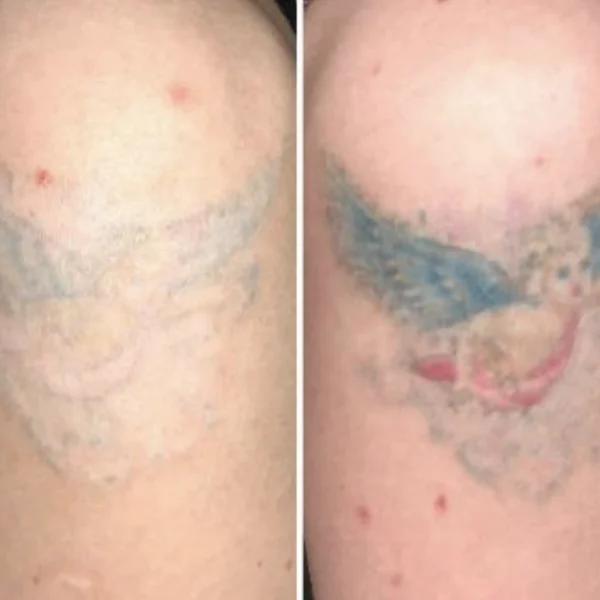
Online Booking
After a while, a coloured tattoo can fade, blur around the contour, and lose its tattoo colour. These are the consequences of applying poor-quality ink and not caring for the colourful tattoo properly during the healing period. Removing a poor-quality cosmetic tattoo can be done in several ways. Specialists recommend using a laser to remove a coloured tattoo.
Features of tattoo removal
A tattoo is nothing but a pigment of a particular colour introduced into the superficial layers of the skin (between the dermis and epidermis). As a rule, the depth of introduction of pigment is from 0.5 to 2 mm, depending on the area of the body. That is, to remove an unwanted symbol or drawing, it is enough to get to the pigment and remove it. And here begins the most interesting.
Ways to remove coloured tattoos
Of the currently existing methods of removal of tattoos, the removal of remover and laser tattoo removal are widely used. Previously, surgical manipulation and even liquid nitrogen were used to remove tattoos, but with the development of laser technology, these methods are increasingly rare.
Is it possible to altogether remove a coloured tattoo, and what affects it:
- The colour of the drawing. Different shades of pigments lend themselves to removal in various ways. For this purpose, a laser or a remover can be used. Light tattoos are more difficult to remove than dark tattoos. For example, lasers perfectly remove black, burgundy, and dark emerald shades. However, with yellowish, blue, and pink, the matter is more complex, but they can be removed.
- The duration of tattooing. For example, the older the drawing, the easier it is to remove it with a laser. This happens because the pigment fights with the natural defence mechanisms of skin cells, which partially remove the pigment over time. It is because of these skin defences that tattoos become discoloured. But with a remover, things are the opposite; the “fresher the tattoo inks,” the better the remover copes.
- Presence of contraindications. Several contraindications are temporary and permanent when removing both coloured and black tattoos. For example, removing them during pregnancy, lactation, colds, or infectious diseases is not recommended. Also, it contraindicated the reduction of coloured tattoos for people with diabetes, cancer, and blood diseases.
- Removal of coloured tattoos by laser.
Removal of coloured tattoos by laser
These days, the procedure is considered the most effective regarding the quality of the results and sensations during and after the session.
Features of the removal of coloured tattoos by laser:
- The laser for tattoo removal acts exclusively on the colours of tattoo pigment and breaks it into nanoparticles. The pigment nanoparticles are then removed through the lymphatic system. One session takes 20-40 minutes.
- The duration of the procedure depends on the size of the tattoo.
- In the colour tattoo removal process, laser exposure in the place of pigment application feels warm, but after the session, it does not appear to crust, as in the case of remover. For this reason, laser tattoo removal is considered a virtually painless procedure and does not require rehabilitation.
- The interval between sessions, during which the lymph removes ink particles, should be 5 to 8 weeks.
- The number of sessions required to obtain the desired result may vary depending on the pattern’s age, ink colour and size. As a rule of thumb, it can be 3 to 8 laser sessions.
Contraindications
- Acute and chronic skin diseases in the phase of exacerbation (eczema, dermatitis, pyoderma);
- mental illness;
- exacerbations of herpes;
- in women – pregnancy and lactation;
- any somatic diseases in the phase of decompensation;
- acute respiratory viral infections, influenza, or any febrile conditions.
Varieties of lasers for removing coloured tattoos
Various types of lasers are used to remove different pigment colours. Each has a suitable laser wavelength to affect a particular tattoo colour.
Ruby lasers
They have a wavelength of 694 nm and work mainly with the most difficult-to-remove shades. Ruby lasers help eliminate patterns in purple, blue, and green in various tones. The depth of penetration of laser radiation into the skin is 1 mm. Therefore, lasers are ineffective with dyes that have been injected more deeply. Another disadvantage of the laser is that it is difficult to work with swarthy and tanned skin since the radiation of the device is absorbed by melanin.
Alexandrite lasers
These are faster and more effective laser models than ruby lasers. They remove tattoos up to 1.8 mm deep. The wavelengths of laser energy of the devices are 755 nm. They are used for laser tattoo removal treatment on light skin tones because, like ruby models, their radiation, the device wave, is absorbed by melanin in the skin.
Neodymium lasers
Modern neodymium lasers can have customizable wavelengths from 532 nm to 1064 nm. Therefore, they are the ideal solution for removing black and coloured tattoos. The 1064 nm wavelength suits black, dark blue and dark green tattoos and designs in cool colours. A laser nozzle with a wavelength of 532 nm is used to remove coloured tattoos. Radiation from the neodymium device is not absorbed by melanin, so the laser is effective even when working with swarthy skin. It is often used as a modern alternative to ruby and alexandrite lasers.
Finally, we note that the effectiveness of removal of coloured tattoos with the laser depends not only on the generation and quality of laser installation. Also, no less important is the professionalism of the beautician. After all, in the process of drawing removal, the device is optimally adjusted and point-directed, and a master does this. Modern equipment and correct professional device adjustment are ideal for a good result. They allow the prevention of burns and scars in clients, as well as contribute to the irrevocable removal of old or unwanted tattoos.
Preparation
Before proceeding to the removal of tattoos, the specialist conducts a complete examination of the image on the body: assesses the difficult colour of the drawing, its saturation, and the quality of pigmentation, and determines the number of balls and the age of the professional tattoo. The specialist sets the laser parameters individually based on the information received. The volume to be treated with a laser depends on the tattoo removal cost.
After consulting the client, the specialist begins collecting anamnesis and determining if there are contraindications. Afterwards, the specialist gives the patient protective glasses and proceeds to perform the procedure. The skin where the drawing is placed is pre-cleaned from dust and skin fat. After removing the tattoo, the treated area accelerates the healing process. At the end of the session, the master gives recommendations on care and makes a schedule for a repeat visit.
Usually, laser tattoo removal occurs in several stages. Each stage has its complexity, time and price.
Ultimately, removing the tattoo will not be possible in one session. In the first session, the tattoo is lightened. The number of procedures can vary from 2 to 12. It all depends on the size of the tattoo, its quality, the presence of colours, skin condition, and other factors.
Getting a free initial consultation with a specialist would be best to ensure that the laser can remove your coloured tattoo. You may be advised to combine methods and add them to the laser remover.
If it is impossible to remove the coloured tattoo with a laser, it will be best to cover it with new, beautiful tattoos. Applying alternative methods of removal is very unsafe and not recommended. To date, no other method than laser has been entirely safe for the skin and health and would not leave burns and scars. Therefore, we do not advise you to take risks.
Consult with a tattoo master, and he will recommend a new, beautiful drawing that can overlap your tattoo. For such an overlap, several laser lightning sessions are often necessary. After all, the darker pattern of the old tattoo is bound to show through over the lighter new one. The tattoo can not be obliterated by laser, but you can lighten it to a certain degree and overlap, getting a new beautiful image on the skin.
What is worth knowing before the procedure?
- The fresher it is, the more difficult it is. Tattoo removal can be carried out no earlier than 1-2 months after its application, as the skin is traumatized during tattooing, and the regeneration process should be fully completed.
- Does it hurt? No pain! Picosecond exposure increases the power of the photoacoustic impact by 70%. Still, a unique patented technology distributes wavelengths of laser energy into many small laser beams, making the removal gentle without losing pigment-crushing power.
- About the rate of final tattoo removal. A course for small black and grey tattoos may require as little as one session, while medium-sized tattoos are removed in an average of 2-4 sessions. Multi-coloured tattoos can be removed with colour inversion (change) and may require 3 to 8 sessions.
- Sun and solarium are not the best friends. Despite the high selectivity of the picosecond laser, 2-4 weeks before the session and 2-4 weeks after are required to refrain from sunbathing. Ultraviolet light can contribute to the occurrence of hyperpigmentation in the area of tattoo removal.
- Skin care after the session. Exclude exposure to hot procedures (bath, sauna) for one week. Use moisturizing creams once a day for 1-2 weeks.
The main difficulties
The main problem when using a laser to remove tattoos is sometimes their incomplete removal despite even a large number of sessions. If this happens, it is necessary to increase the energy density (if the power of the laser device allows), but at the same time, be careful that the parameters of laser radiation remain within safe limits and do not cause scarring or pigmentation disorders. The minimal side effects sometimes observed in the removal of tattoos or the wrong choice of laser:
- Pigmentation disturbance. Even with basic precautions, hyper- or hypopigmentation may occur in a few per cent of cases.
- Scar formation. When choosing the wrong laser parameters for tattoo removal, this side effect is infrequent. If thermal damage occurs, it is necessary to provide good care for the damaged area by applying a gauze bandage.
- Darkening of the tattoo pigment. This effect can sometimes occur when exposed to laser radiation on dyes of white colour. To prevent such cases, it is recommended to produce spot exposure to laser radiation with a spot of minimum diameter.
Thus, given the complexity of laser tattoo removal procedures, they should be performed only by highly qualified professionals with equipment suitable for the specific colour of the dye. Multifunctional complexes allow doctors to remove coloured tattoos based on a single system.
Other ways to remove a coloured tattoo
- Overlapping. The procedure, the essence of which is to “paint over” the old tattoo with a flesh-coloured pigment. The main disadvantage of overlapping is that dark fragments of the old tattoo will be visible sometime after the session against the background of flesh-coloured pigment. Also, the flesh-coloured pigment will be strongly highlighted in tanning.
- Dermabrasion is the removal of skin by mechanical grinding with a tattoo. In fact, during the procedure, the doctor “removed” the upper layers of skin with pigment. Today, dermabrasion is practically not carried out, as it has many disadvantages, such as painful sensations and the appearance of scars.
- Surgical removal. The most radical way to get rid of a tattoo is to cut out a part of the skin with a drawing with the help of a scalpel. Among the disadvantages are the long recovery period and the inevitable appearance of scars and scars.
- The use of various cosmetics. Special cream is beaten into the place with the drawing with a tattoo machine. In the skin, it is mixed with pigment and brought out. This is a relatively painless method, after which no scars are formed. The main disadvantage is low efficiency, so removing a sizeable coloured tattoo can take many months.
- Chemical method of tattoo removal. The skin with the drawing is cauterized with aggressive substances, eliminating the upper layer of skin and pigment. The disadvantages include a high risk of scarring. In addition, the procedure is challenging to call painless.
Welcome to Melbourne’s Cosmetic Tattoo, a studio that is fully licensed and certified. Continuously keep up with the latest technologies and trends of permanent makeup tattooing which are happening in the industry is our ultimate objective.
We use modern techniques emphasizing and enhancing the natural beauty of our clients to provide them with the safest and most effective cosmetic tattooing procedures. Through European advanced method of permanent make up, you are assured of best results. Our cosmetic tattooist Olha Po only uses professional grade premium equipment as well as high quality pigments that have been luxe certified.
FAQ
_______________________________________
___________________________________________________________________________________________
_______________________________________
___________________________________________________________________________________________
_______________________________________
___________________________________________________________________________________________
_______________________________________
___________________________________________________________________________________________